Traffic comes, orders do not
Visitors browse and leave. Products are hard to find, pages do not answer doubts, and checkout adds steps — each one quietly leaking paying customers.
 Get Project Plan
E-Commerce Development
For product businesses: we structure the catalog, build product pages that answer doubts, remove checkout friction, and connect payments, email, and sales tracking — with scope and price fixed before development starts.
Who this is for
E-commerce development is the planning and build of an online store around the full sales path: product discovery, product pages, cart, checkout, payments, and post-purchase follow-up. Otherwise Solutions builds stores for product businesses in Utah and across the US. If one of these sounds familiar, keep reading.
Visitors browse and leave. Products are hard to find, pages do not answer doubts, and checkout adds steps — each one quietly leaking paying customers.
The products are ready; the store is not. Catalog structure, payments, shipping, and tax need to be right at launch — not patched afterwards.
Sales happen over DMs, invoices, and spreadsheets. Moving to real online sales means structure, payments, and tracking — not just a product grid.
No order emails, no abandoned-cart recovery, no campaigns. The store sells once and forgets — repeat revenue needs connected email and CRM.
What's included
E-commerce development at Otherwise Solutions includes five things: store strategy and catalog structure, product and collection pages, checkout with payments and shipping, email and CRM connections, and conversion tracking. Together they cover the path from first visit to repeat order.
We plan how customers will find products before we design how products look — structure first, polish second.
Pages built to answer the questions that block a purchase: what it is, why it is worth it, and what happens after the order.
The fewest possible steps between “I want this” and a paid order — with the operational plumbing done right.
The systems that turn one order into a customer: recovery emails, order updates, and campaigns that bring people back.
You see the funnel from day one — sessions, add-to-cart, checkout, orders by source — so improvements come from data.
Tell us what you sell and where sales get stuck. We will reply with a store structure, a fixed scope, and a price — before you commit to anything.
Price calculator
One-page websites from $900, multi-page websites from $2,100, and online stores from $2,800. Pick what your project needs and get an instant ballpark — the final quote is always scoped individually.
Pricing
E-commerce cost depends on four factors: catalog size and structure, checkout and shipping complexity, design depth, and integrations. We fix the scope, timeline, and price before development starts — the budget is known before any code is written.
Twenty products with simple options cost less than two thousand with variants, bundles, and filters. The catalog plan settles this up front.
One warehouse and flat shipping is simple. Multiple zones, carriers, tax rules, and subscriptions add scope — and we configure all of it.
A clean build on a proven store structure costs less than fully custom design. Both sell; the right choice depends on your brand and market.
Email flows, CRM, accounting, and marketing tools add scope — and usually pay for themselves in recovered carts and repeat orders.
Choosing the right path
Your own online store is the right build when the brand, margins, and customer relationship matter: you keep the customer data, control pricing and presentation, run your own campaigns, and stop paying marketplace fees on every order. It is how a product business becomes a brand instead of a listing.
A marketplace is enough when you are testing demand: it brings built-in traffic and handles payments, at the cost of fees, competition on the same page, and a customer who belongs to the platform. Many businesses start there — and build their own store once repeat sales justify it.
Decide by where the profit goes long term: if customers buy once, marketplaces are fine; if they could buy again, every order through a marketplace is a relationship you rented instead of owned. The technical foundation matters too; our Svelte vs. React vs. Vue in 2026 article explains the tradeoffs behind fast, SEO-ready builds.
Proof
Real commerce builds with payments, integrations, and tracking in production — including a travel store earning paid orders from organic search.

Travel e-commerce
Web app + eShop

SaaS AI platform
What happens after you reach out
You describe the products and where sales get stuck; we ask about customers, margins, and current tools. First reply within one business day.
Catalog structure, platform recommendation, feature list, timeline, and a fixed price — agreed before development starts.
Catalog, product pages, and checkout take shape where you can click through them — feedback lands while changes are cheap.
Payments process, shipping and tax calculate, order emails send, tracking fires — tested with real test orders on real devices.
You go live with the funnel measured and a plan for what to improve next — based on where customers actually drop off.
Next step
Send what you sell, what exists now, and the result you want. We will reply within one business day with a store plan, a fixed scope, and a clear next step.
FAQ
The cost depends on catalog size and structure, checkout and shipping complexity, design depth, and which email, CRM, and marketing tools the store connects to. We fix the scope, timeline, and price before development starts — so the budget is known up front.
The one that fits the business. Established platforms work well for most catalogs; a custom build makes sense when products, pricing, or workflows do not fit the template. We recommend the smallest stack that does the job — and explain why.
Often, yes. Weak product pages, confusing navigation, and leaky checkout can usually be fixed in place. A rebuild is a recommendation we make only when fixing costs more than rebuilding.
A focused store launches in weeks; larger catalogs and deeper integrations take longer. The timeline is part of the fixed scope, so you know the launch window before development starts.
You bring the product knowledge and photos; we structure the catalog and draft page copy that answers buyer questions. If descriptions need writing at scale, we plan that workflow as part of the scope.
Every store ships with conversion tracking: traffic, add-to-cart, checkout, and orders by source are numbers on a dashboard from day one — so you see where sales leak and what fixes them.
Keep exploring
Business websites, landing pages, custom software, and mobile apps — the full development picture beyond stores.
Running ads to your products? A focused campaign page often outsells a catalog link.
Product and category pages can earn search traffic — and analytics shows which products convert it.
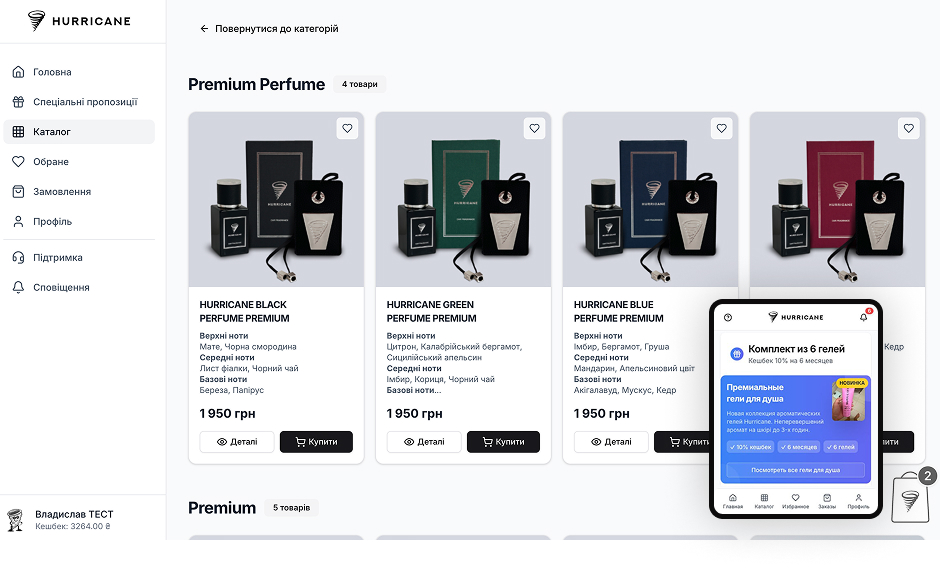
A premium perfume brand's connected commerce system — storefront, apps, CRM, and loyalty in one dataset.
E-commerce in Utah & across the US
E-commerce development is the planning, design, and build of an online store around the full sales path: catalog structure, product and collection pages, cart and checkout, payments, shipping and tax, and post-purchase email. At Otherwise Solutions it ships with conversion tracking included, delivered as one project with a fixed scope and price.
We build online stores for product brands, retailers, and businesses moving from manual orders to online sales — in Salt Lake City, Lehi, Provo, Draper, Sandy, Ogden, and Utah County, and for teams across the United States. The process is the same everywhere: scope first, a staging store during the build, and a tested launch.
A store converts when finding, trusting, and buying are each easy: collections that surface the right product, product pages that answer doubts with photos, specifics, and reviews, a checkout with the fewest possible steps, and visible shipping and return terms. Most underperforming stores fail at one of those four points — and conversion tracking shows which one, so improvement money goes to the actual leak instead of a redesign guess.
Otherwise Solutions builds stores on established e-commerce platforms when the catalog fits them, and custom storefronts on PHP and JavaScript backends when it does not. Payments run through proven systems such as Stripe; shipping, tax, email, CRM, and analytics connect through standard integrations. Every store ships responsive, fast, and SEO-ready — product and collection pages structured so Google and AI assistants can read what is sold, to whom, and on what terms.
E-commerce pricing is scope-based: catalog size, checkout and shipping complexity, design depth, and integrations decide the cost. Otherwise Solutions fixes the scope, timeline, and price before development starts. A focused store with a small catalog costs less than a multi-warehouse build with subscriptions, loyalty, and deep marketing integrations.
A focused store with a prepared catalog launches in weeks; the variables that stretch timelines are almost always content and operations, not code — product photos and descriptions, shipping rules, tax setup, and return policies. We surface those dependencies in the scoping phase with a checklist, so the build and the catalog preparation run in parallel instead of blocking each other.
The reference build is Hurricane, a premium perfume brand: online store, iOS and Android apps, CRM integration, and a cashback loyalty program running on one dataset — storefront, customer accounts, and orders in a single system. When a store needs to grow into apps or deeper operations tooling, that path runs through mobile app development and custom software with the same team.
After launch, the store becomes a measured funnel: analytics shows where visitors drop off — product page, cart, or checkout — and the improvement plan targets the biggest leak first. We stay available for conversion work, campaign landing pages, email flows, and catalog growth at the pace the business needs.
Contact
Send the basics: what you need, what exists now, and what business result matters. We will review it and reply with the next practical step.
Contact
Use the same contact form. Tell us what you need and we will reply with the next step.
Request sent
Your message was delivered. We will review the project details and reply with the next practical step.