
Otherwise Solutions designed and built Blogent, an AI platform whose flagship product — AI SEO Blog — studies a business website, plans articles around what its customers actually search for, writes them, and publishes them daily, optimized for Google and AI search. We delivered it as a finished, paying product with real customers — not a demo.
What Blogent is
Blogent (blogent.tools) is an AI products company. Its flagship product, AI SEO Blog, makes one promise: rank on Google and AI search on autopilot. A business connects its website; the system studies its services, builds a content plan, writes articles, and publishes them — every day, without a content team. We designed the product, built the platform, and built the site that sells it.
The product: an SEO blog that runs itself
It learns the business first
Before writing a word, the system studies every service and product on the client's site and learns what the business does and what makes it different. It works for brand-new sites with no search history, and uses a site's existing search data when it has some.
A content plan built on real searches
Topics come from the business and from what its customers actually search for — a balance of buying-intent and informational articles. The client gets a ready content plan without lifting a finger.
Long, research-based articles
Each article is researched against trusted sources and comes out long and well-structured — with lists, tables, and answer sections — written to rank in classic Google search and to be picked up by AI assistants like ChatGPT and Gemini.
Marketing inside every article
The system adds calls to action, brand mentions, and products from the client's own catalog that fit the topic. Its signature element is the in-article promo code — a bonus the reader discovers inside the content. Every article links back to the site's commercial pages, so the blog pulls readers toward buying instead of just informing.
Publishes itself, every day
Finished articles publish straight to the client's website — with titles, images, and translations created automatically, and an optional review step before anything goes live. Daily, without a content team and without anyone's hands on it.
A complete product, not a prototype
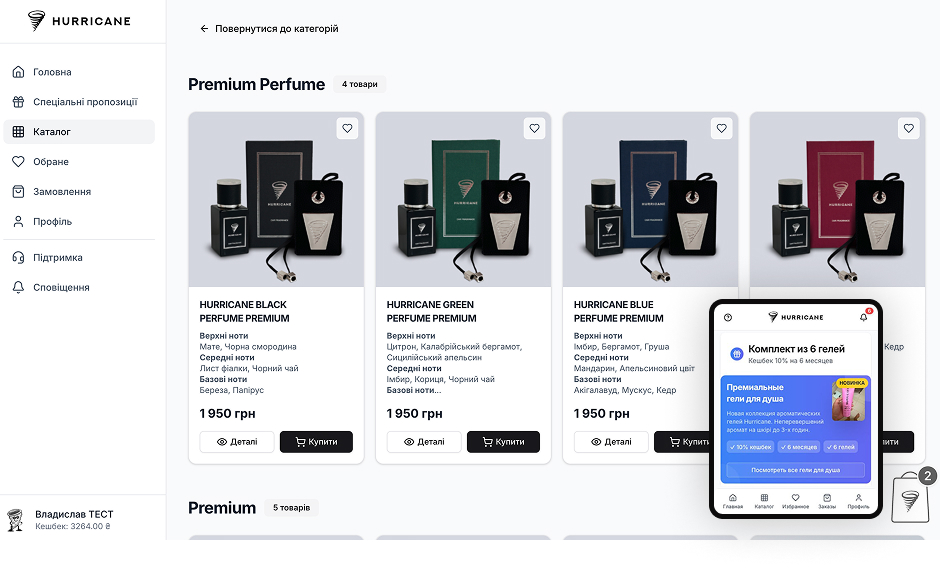
Blogent is a complete, paying product — not a demo. It includes the AI engine that researches, writes, and publishes; the customer dashboard where a business connects its site, picks a plan, and watches its blog grow; automatic subscription billing; and the marketing website that sells it. It draws on several leading AI models together, so article quality stays high and the service never depends on a single one.
Proof it works: our own flagship case
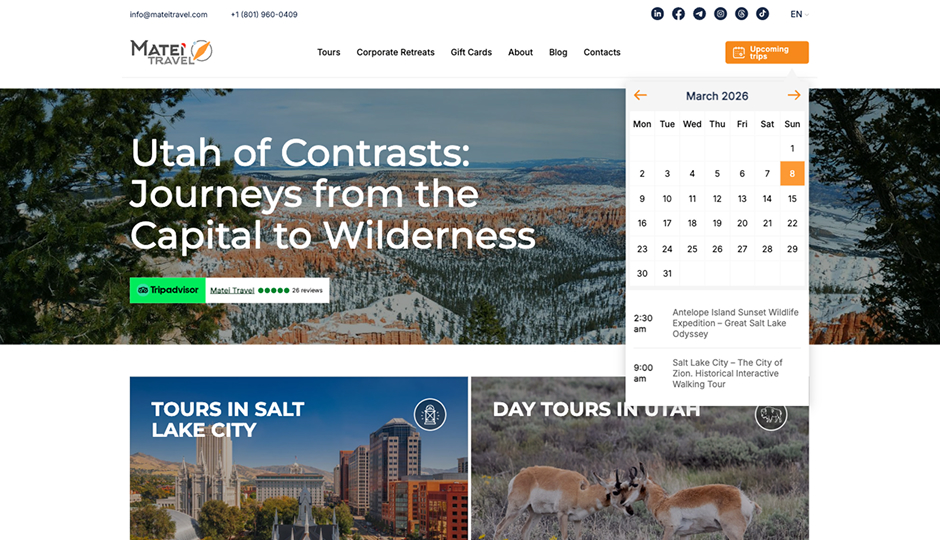
The clearest demonstration of Blogent is the Matei Travel case, where the product ran the growth phase: +196% Google clicks in two months, +875% more queries on the first page of Google, visits arriving from ChatGPT and Gemini, and a website that went from zero search history to a dozen paid organic orders a month. The product's first paid order for that client came directly from a blog article's promo code.
What the platform does now
- Businesses connect a site, pick a plan, and get a daily, self-publishing SEO blog.
- The blog writes and publishes itself every day, with no content team.
- Subscriptions and billing run automatically, without operator work.
- The platform serves paying clients across e-commerce, medical, tourism, and construction.