Otherwise Solutions built one connected commerce system for Hurricane, a premium perfume brand: an online store, iOS and Android apps, a customer loyalty program with cashback, and a single customer database the team works from. The store, customer accounts, orders, and loyalty work as one system instead of five disconnected tools.
Who is Hurricane
Hurricane is a premium fragrance brand selling its own product lines — perfumes and shower gels — direct to consumers online. The catalog is presented the way a perfume house presents itself: named scent lines described by top, heart, and base notes, not marketplace listings. For a premium brand, the buying experience is part of the product, which set the bar for both design and engineering.
The starting point
A direct-to-consumer brand quickly outgrows a plain storefront. Repeat buyers want accounts, order history, favorites, and a reason to come back; the brand wants loyalty mechanics, a CRM view of its customers, and a place on the customer's phone. Hurricane needed all of that as one connected system — store, accounts, orders, loyalty, and apps on shared data.
What we built
An online store that fits a perfume brand
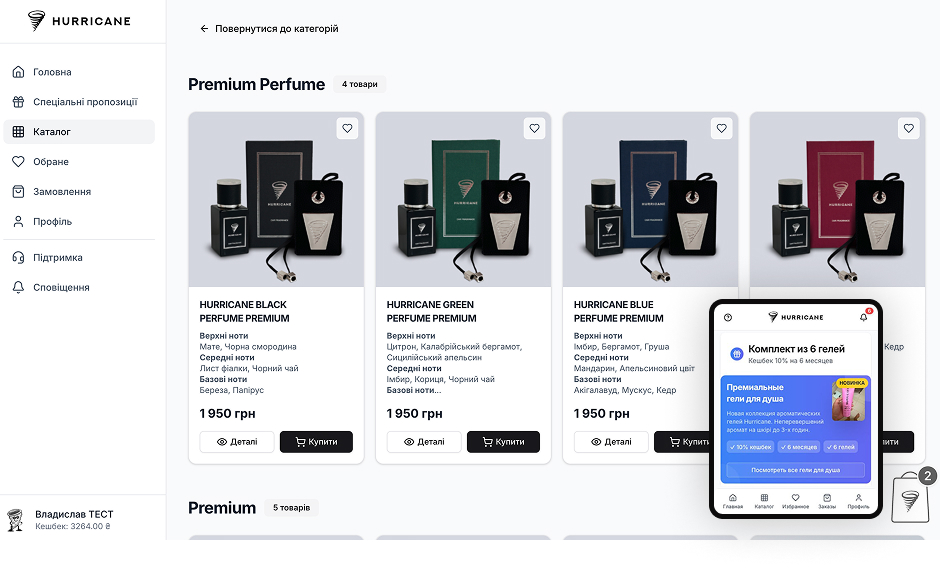
A store that presents the products the way a perfume house does — named scent lines described by their top, heart, and base notes, special offers, and card checkout. The team adds and edits products themselves, without needing a developer for every change.
A customer area with loyalty built in
Signed-in customers get a fast, app-like personal area: the catalog with favorites, order history and status, support, and one-tap sign-in. The cashback loyalty program lives right there — every purchase earns a balance customers can see and spend on their next order. It is a reason to come back that the brand owns, instead of renting it from a third-party loyalty service.
iOS and Android apps
The same customer area also ships as real iOS and Android apps, putting the brand on the customer's home screen with push notifications — at a fraction of a typical app budget. Because the website and both apps share the same system, every new feature appears everywhere at once.
One view of every customer
The store, accounts, orders, payments, and loyalty all feed one customer database, so the team sees every customer, order, and cashback balance in a single place. Automation keeps it current — loyalty balances update on their own, and support and repeat-purchase work run on real data instead of scattered inboxes and spreadsheets.
What the brand has now
- Customers browse, buy, track orders, and spend cashback in one place — on the web or in the app.
- The team manages the catalog itself and sees every customer and order in one view.
- Loyalty runs automatically: purchases add cashback, balances update in the account.
- The store, the customer area, and both apps stay in sync — one change appears everywhere.
The result is one connected system behind the brand: it sells online, keeps customers coming back with loyalty, and lives on their phones.